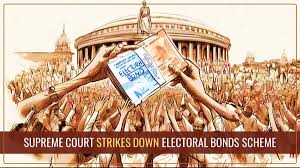
In a landmark judgment in February 2025, the Supreme Court of India struck down the controversial Electoral Bonds Scheme, terming it unconstitutional. The court’s decision came in response to multiple petitions that questioned the opacity and anonymity in political funding through these bonds.
The Electoral Bonds Scheme, introduced in 2018, allowed individuals and corporations to donate to political parties without disclosing their identity. While it was initially justified as a way to curb black money in politics, critics argued that it merely legalized anonymous donations and gave an unfair advantage to ruling parties.
The five-judge constitutional bench led by Chief Justice D.Y. Chandrachud held that citizens have the right to know who funds political parties. The judgment has far-reaching implications — not just for election financing, but also for accountability in governance.
Following the verdict, the Election Commission has asked political parties to disclose past donations made via electoral bonds. Several opposition leaders and activists hailed the decision as a victory for democracy, calling for further reforms in political funding — including state funding of elections and tighter corporate donation rules.
However, critics warn that political donations may now go underground again unless replaced by a more transparent and structured alternative. The ruling puts pressure on lawmakers to create a new, fairer system that balances transparency with donor privacy. India has taken a bold step toward cleaner politics, but the road ahead will require vigilance and reform.